
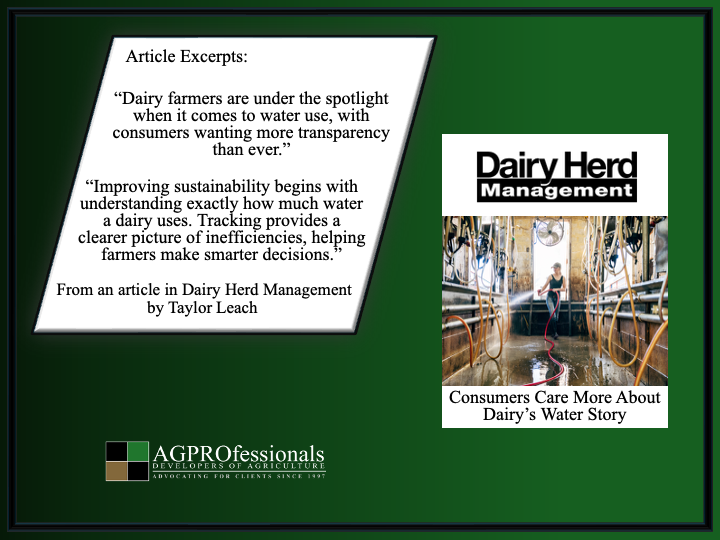
Dairy farmers are under the spotlight when it comes to water use, with consumers wanting more transparency than ever. For producers, managing this vital resource means balancing production needs with sustainability and regulatory expectations.
Tara Vander Dussen knows this all too well. The former environmental consultant and current co-host of the “Discover AG” podcast has spent much of her career helping farms navigate water regulations and sustainability challenges. She has also faced these pressures firsthand on her own dairy in New Mexico.
“Water is literally our limiting resource,” she says. “Conversations about the future of dairy revolve around how we access, use and conserve water.”
On an episode of “The Dairy Podcast Show,” Vander Dussen discussed why tracking and managing water is essential for dairies, noting that sharing these practices with consumers helps build trust.
Tracking and Cutting Water Use
Improving sustainability begins with understanding exactly how much water a dairy uses. Tracking provides a clearer picture of inefficiencies, helping farmers make smarter decisions.
“The first step [to improving water management] is knowing your numbers,” Vander Dussen says. “Through your farm’s permitting process, you can figure out how many gallons per cow per day you actually use. That baseline helps you see where water is going and where it might be wasted.”
Without that data, small leaks, overuse or inefficient equipment can go unnoticed, but improving water efficiency doesn’t always require large-scale investments or major infrastructure projects. Often, simple, low-cost adjustments, like repairing leaks, adjusting flushing routines or improving cleaning schedules, can make a big difference.
“The simplest management changes often have the biggest impact,” Vander Dussen notes, adding that the key focus should be figuring out how to recycle water as many times as possible.
Consumers Are Watching
With water under the spotlight, dairy farmers are finding transparency and communication more important than ever. Effectively conveying how water is reused and conserved is essential, particularly as consumers are becoming more engaged in understanding the sustainability of their food systems.
“With water becoming more limited, there will be more conversations with consumers about who is using water and how much of it,” Vander Dussen says.
She sees this curiosity as an opportunity to showcase conservation practices. Farmers can build trust by showing the steps they take to reduce water use and explaining why those choices matter. Part of that trust comes from presenting information in a clear, relatable way.
“We have to meet consumers where they’re at,” she says, “bring them into the fold of agriculture, bring them into food, without getting too lost in the weeds. It’s striking that balance of giving them information without overloading them.”
Vander Dussen also highlights the scale of the knowledge gap.
“We are trying to catch people up about a hundred years. That is a huge gap. What often fills it, especially online, is misinformation. One video or something trending on TikTok can shape perceptions. We have to do a better job and accept responsibility as farmers to bring consumers along on this journey.”
Making Every Gallon Count
There are several ways dairies can reuse water throughout the operation, and many farms already rely on these practices to stretch every gallon. The process often begins in the parlor with plate-coolers, where cool groundwater is used to lower the temperature of the milk. Because this cooling water hasn’t touched any contaminants, it can be used a second time for sanitizing milking equipment.
After its second use, the water is often directed to a lagoon for storage until it’s needed for barn management. From there, farms commonly use the recycled water to flush manure from holding pens during milking and later to clean alleyways where cows stand and eat. Once the water completes its job in the barn, it returns to the lagoon for another round of storage and settling. In the final stage, recycled water is applied to fields for crop irrigation.
The Future of Dairy Depends on Water
Across the country, water is central to dairy’s future, but how dairies use and conserve water is no longer just an operational concern; it’s a story the public is watching.
Vander Dussen sees this as an opportunity. By showing consumers how water is recycled, conserved and managed thoughtfully, dairies can build trust, highlight their farm’s sustainability efforts and strengthen community connections.