
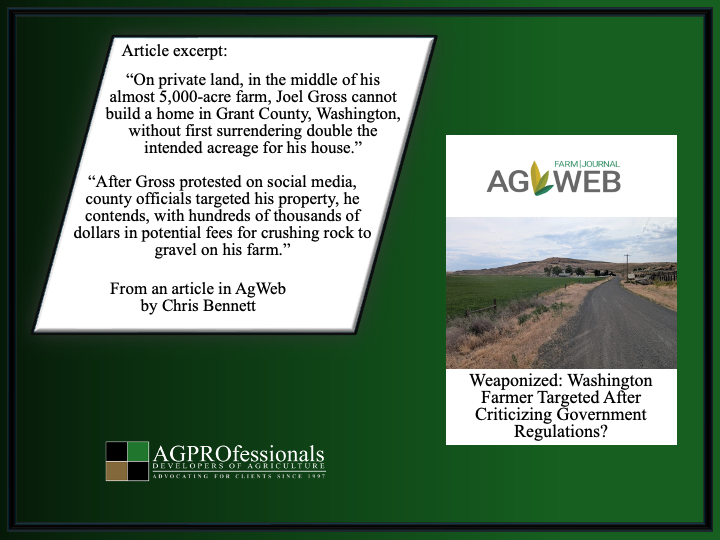
A Washington farmer says his attempt to build a home and maintain roads on his own nearly 5,000-acre property has turned into a costly battle over government power, private property, and free speech. According to the AgWeb article, Joel Gross was told that building on land classified within the Washington Shrubsteppe Restoration and Resiliency Initiative would require him to set aside at least two acres under deed restriction for every acre impacted by his home, driveway, and solar panels, or potentially pay mitigation fees. Gross argues that the requirement effectively forces landowners to surrender control of privately owned, tax-paying property simply to use their own land.
The dispute became even more troubling after Gross publicly criticized the regulations. He alleges that county officials subsequently reversed their earlier position regarding rock he planned to crush for use exclusively on his farm and began treating the activity as an industrial surface-mining operation. According to Gross, the new classification could subject him to a conditional-use permit, environmental review, a multiyear approval process, and potentially hundreds of thousands of dollars in costs. The timing has led Gross to allege retaliation for exercising his First Amendment rights. Grant County told AgWeb it was reviewing his concerns and declined an interview while an investigation was ongoing, so the retaliation allegation remains disputed rather than established fact.
For farmers and rural landowners, the case raises a larger and unsettling question: How much control does private ownership really provide when government agencies can impose costly conditions on the use of that land? Gross believes his experience is a warning about regulatory power gradually eroding property rights and making it increasingly difficult for the next generation to farm, operate a rural business, or even build a home on property they own. Whether his retaliation claims are ultimately substantiated or not, his case highlights the enormous consequences regulatory decisions can have for agricultural families and the importance of transparency, due process, and strong protections for private property rights.
Read the full AgWeb article: HERE