
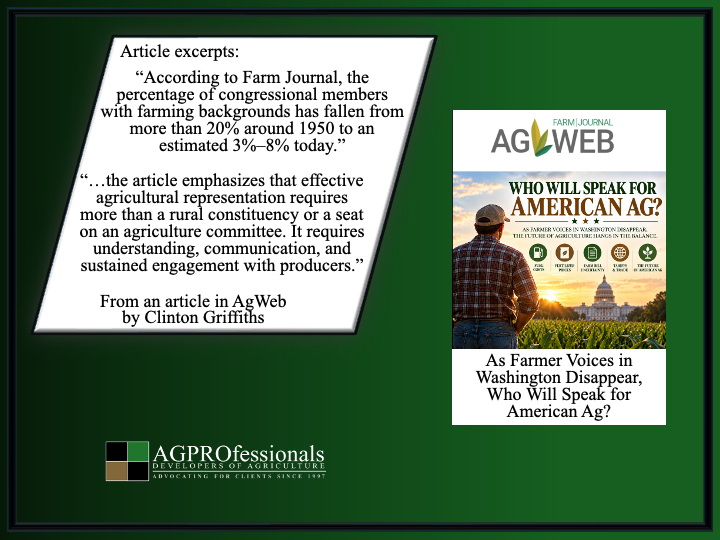
As the November midterm elections approach, American agriculture faces a growing concern: the declining number of lawmakers with firsthand farming and ranching experience. According to Farm Journal, the percentage of congressional members with farming backgrounds has fallen from more than 20% around 1950 to an estimated 3%–8% today. Of the 136 current members identified as having agricultural connections or serving on congressional agriculture committees, nearly 40 are leaving Congress, seeking another office, or facing competitive elections. Meanwhile, a survey of rural voters found that 73% believe elected officials do not understand their communities or livelihoods.
This potential loss of agricultural knowledge comes at a critical time for producers. Rising fuel and fertilizer costs, trade uncertainty, and the unresolved farm bill are among the issues affecting farm and ranch operations. Changes in congressional leadership could also shift agricultural policy priorities, including nutrition programs, USDA oversight, and support for regional agricultural interests. The article highlights growing frustration among rural voters who want elected officials to understand the economic realities and challenges of agricultural production.
Ultimately, the article emphasizes that effective agricultural representation requires more than a rural constituency or a seat on an agriculture committee. It requires understanding, communication, and sustained engagement with producers. Regardless of political affiliation, agricultural organizations, farmers, and ranchers have an important role in educating lawmakers and building relationships throughout the year, not simply during election season. As experienced agricultural voices become less common in Washington, ensuring that policymakers understand the people who produce America's food becomes increasingly important.
Read the full article: HERE